
Choosing new upholstery fabric sounds simple enough. Find a colour you love, pick a texture that feels nice, and you’re done. Right?
Not quite.
The fabric covering your sofa, armchair or dining chairs has a bigger job than simply looking good. It needs to handle everyday wear, suit your lifestyle, feel comfortable and, ideally, still look great years down the track.
That can be a challenge in Australian homes, where strong sunlight, busy family routines, pets and changing temperatures all influence how furniture ages.
Perhaps you’re restoring a favourite lounger that’s seen better days. Maybe you’re updating your dining chairs or choosing upholstery for a brand-new sofa. Whatever the project, getting the fabric right from the beginning can save you money, frustration and unnecessary maintenance.
This practical upholstery fabric guide will help you understand your options, compare materials and choose something that works for your home rather than just the showroom.
1. Start With How You Actually Use Your Furniture
Before falling in love with a fabric sample, think about what happens on your furniture every day.
Is your sofa the centre of family life, where everyone gathers for movies, snacks and afternoon naps? Or is it a beautiful occasional lounge that rarely gets used?
There’s a big difference between the upholstery these two pieces need.
For frequently used furniture, durability and easy cleaning should be high priorities. A tightly woven polyester blend or quality performance fabric is often a practical choice.
For occasional seating, you have more freedom to explore luxurious textures, delicate weaves and decorative finishes.
Ask yourself a few questions:
- How many people use this furniture regularly?
- Will children or pets be sitting on it?
- Is it exposed to direct sunlight?
- How often am I prepared to clean it?
- Do I prefer a soft, relaxed feel or a more structured appearance?
Your answers will quickly narrow down the options.
The best upholstery fabric isn’t necessarily the most expensive or fashionable. It’s the one that fits how you live.
2. Understand the Different Types of Upholstery Fabric
Walk into an upholstery showroom and you’ll discover there’s much more choice than cotton and leather.
Each material has advantages, and understanding them makes choosing considerably easier.
Polyester and Performance Fabrics
Polyester is popular for good reason. It’s versatile, generally affordable and available in an enormous range of colours and textures.
Quality polyester upholstery can offer excellent abrasion resistance, making it a strong candidate for everyday sofas.
Modern performance fabrics take practicality further, with some collections offering stain-resistant finishes, improved cleanability and enhanced durability.
They’re worth considering for busy households.
Linen and Cotton
Natural fabrics have a relaxed, inviting appearance that’s difficult to replicate.
Linen brings beautiful texture to coastal and contemporary interiors, while cotton feels soft and breathable.
However, natural fibres can wrinkle, absorb spills and require more careful maintenance. Blended fabrics may offer a useful compromise between natural texture and everyday practicality.
Velvet and Chenille
Love furniture that feels luxurious?
Velvet creates a rich, elegant finish, while chenille offers a soft, cosy texture that’s particularly appealing on lounges and armchairs.
Both can work beautifully, but quality varies considerably.
Some modern synthetic velvets are surprisingly hard-wearing, whereas delicate versions may show pressure marks or require specialist cleaning.
Always check the manufacturer’s care instructions and durability rating.
Leather and Vinyl
Leather provides a timeless finish that can develop character as it ages. Vinyl offers a leather-like appearance and is commonly used where wipe-clean practicality matters.
Neither material is automatically maintenance-free.
The quality, finish and intended use make a significant difference to performance.
3. Leather vs Fabric Upholstery: Which Is Better?
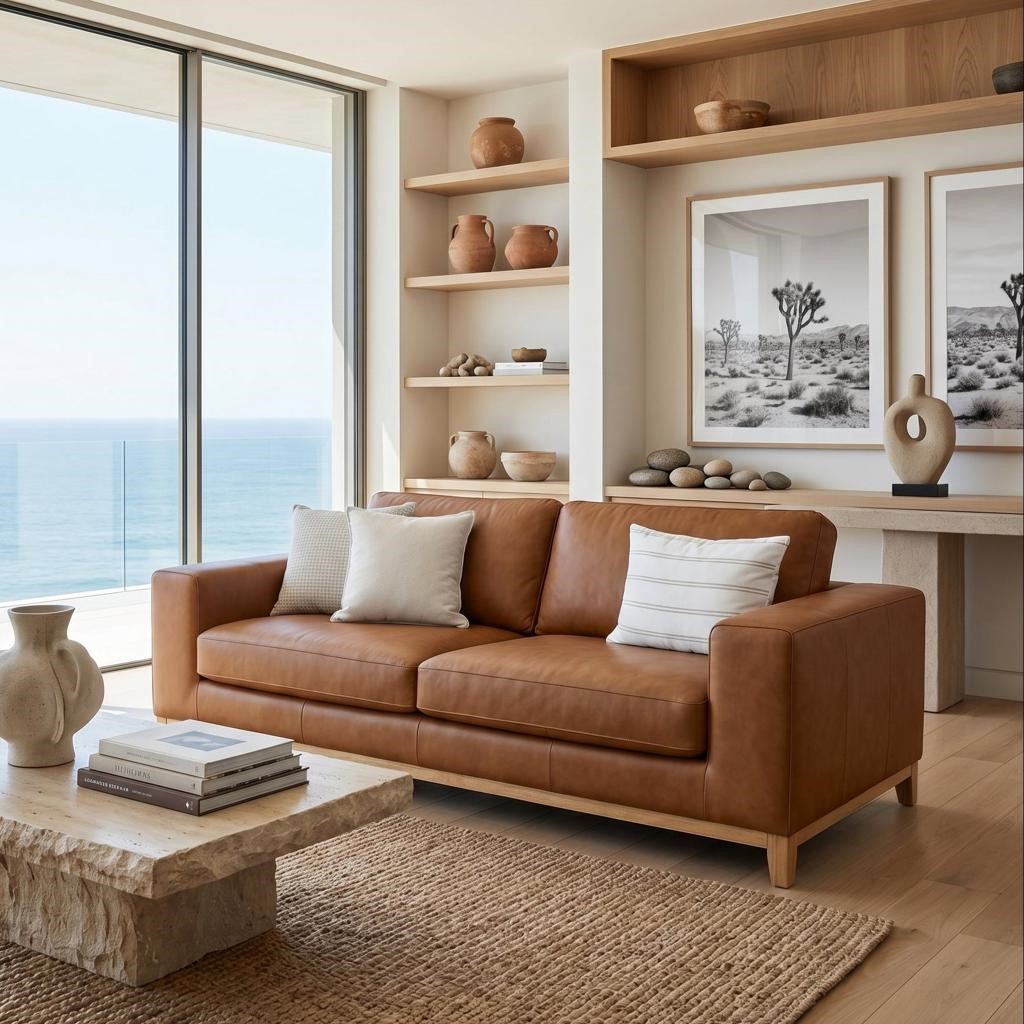
Leather upholstery
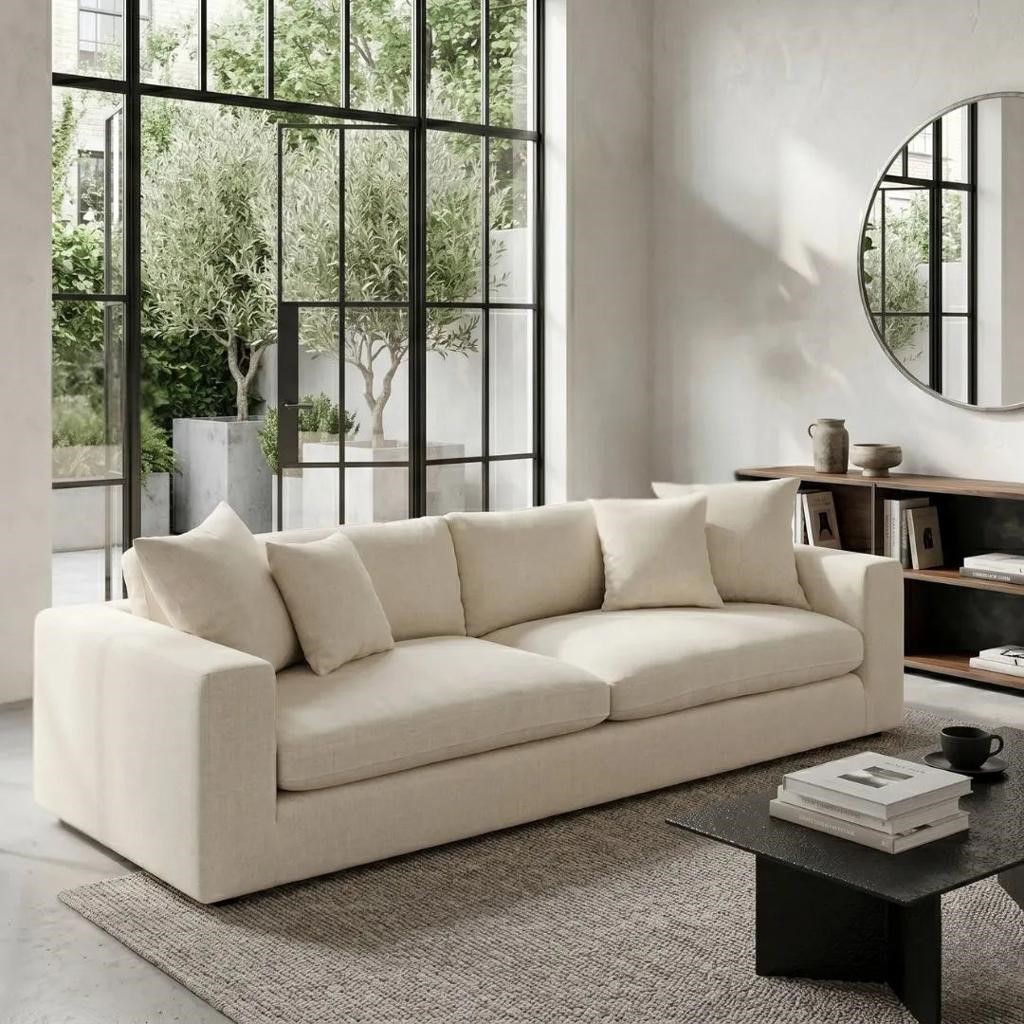
Fabric upholstery
It’s one of the most common questions homeowners ask when choosing new upholstery.
The answer depends on your lifestyle, budget and personal preferences.
| Feature | Leather | Fabric |
| Appearance | Classic and refined | Wide variety of styles |
| Comfort | Can feel hot or cool initially | Often softer and cosy |
| Cleaning | Many spills wipe away easily | Depends on fibre and finish |
| Durability | Quality leather can last for years | Performance fabrics can be highly durable |
| Pet suitability | May show claw scratches | Tight weaves can resist snagging |
| Cost | Often higher upfront | Options across most budgets |
Leather is an excellent choice if you appreciate a sophisticated look and are comfortable with occasional conditioning and maintenance.
Fabric offers greater flexibility in colour, pattern and texture. It can also feel more comfortable in different temperatures.
In Perth’s warmer months, many homeowners appreciate the breathable, softer feel of fabric upholstery.
Neither option is universally better.
A well-made fabric sofa can outperform poor-quality leather, just as premium leather can outlast an unsuitable fabric.
The key is comparing quality, not simply material names.
4. Choosing Upholstery Fabric for Families With Kids
If you’ve got young children, you already know that furniture has to survive more than ordinary sitting.
Think spilled juice, sticky fingers, biscuit crumbs, jumping, climbing and the occasional mysterious stain.
A beautiful cream sofa might look wonderful in a magazine, but practicality becomes important when real family life takes over.
For family furniture, look for:
- Stain-resistant or easy-clean finishes
- Durable, tightly woven construction
- Mid-tone colours that help disguise minor marks
- Textured or subtly patterned fabrics
- Manufacturer-approved cleaning methods
A quality durable sofa fabric should handle regular use without quickly becoming worn or tired-looking.
Polyester blends and selected performance upholstery fabrics are often sensible choices.
Removable cushion covers can also make maintenance easier, although you should never assume they’re machine washable without checking the care label.
And don’t feel restricted to dark colours.
Modern upholstery collections offer attractive neutral, coastal and contemporary shades with practical finishes.
You can still have a beautiful living room without worrying about every little spill.
5. What’s the Best Upholstery Fabric for Pets?
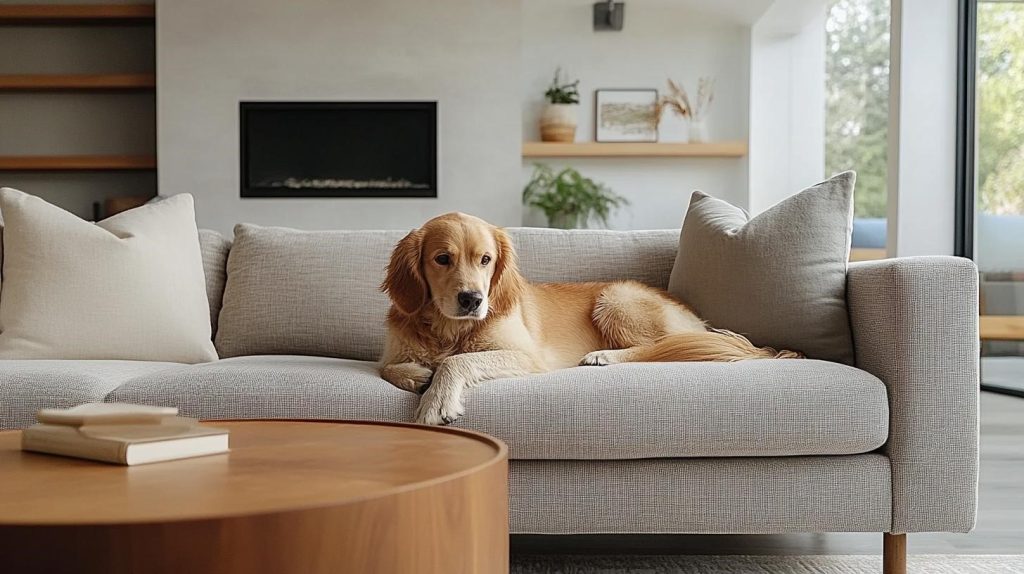
Dogs and cats are part of the family, but they can be surprisingly tough on furniture.
Claws, shedding fur, muddy paws and favourite sleeping spots all influence how upholstery wears.
If your pets regularly share the sofa, fabric construction matters just as much as the fibre.
Tightly woven fabrics are generally a better starting point because there are fewer loose loops for claws to catch.
Consider smooth microfibre, suitable performance fabrics and tightly woven synthetic blends.
It’s usually worth being cautious with loose bouclé, open-weave linen and heavily looped textures, particularly if you have cats that scratch.
Colour matters too.
If your dog has light-coloured fur, a pale or medium-toned sofa may disguise shedding better than dark navy or charcoal.
For darker pets, the opposite might apply.
Leather can be easy to wipe clean, but claws may leave visible scratches, particularly on certain finishes.
No upholstery is completely pet-proof, so choose a fabric that’s easy to maintain and ask about snag resistance as well as abrasion resistance.
A washable pet throw can also help protect your favourite seat.
6. Consider Australia’s Strong Sunlight
One factor homeowners sometimes overlook is sunlight.
In Australia, particularly in bright, sunny locations such as Perth, UV exposure can gradually fade upholstery and affect certain materials.
That gorgeous navy lounge positioned beside a north-facing window might not retain its original colour indefinitely.
Before selecting fabric for a sunny room, ask about its lightfastness rating.
Lightfastness measures how well a material’s colour resists fading when exposed to light.
Some upholstery textiles are assessed using the Blue Wool Scale, which runs from 1 to 8. Higher ratings indicate better resistance to fading.
For furniture exposed to substantial daylight, look for fabrics with strong published lightfastness results.
Other practical steps include installing blinds or curtains, using UV-filtering window treatments and positioning furniture away from prolonged direct sunlight where possible.
Remember that even high-quality fabrics can fade over time under intense exposure.
If you’re furnishing an alfresco area, choose upholstery specifically designed for outdoor conditions rather than assuming indoor fabric will cope.
7. Understand Fabric Durability Ratings Before You Buy
Here’s where choosing upholstery gets a little more technical, but it’s worth understanding.
One of the most useful measures of fabric durability is the Martindale rub test.
This laboratory test measures a fabric’s resistance to abrasion by repeatedly rubbing it under controlled conditions.
Generally, a higher rub count indicates greater abrasion resistance.
Upholstery Fabric Durability Ratings Explained
| Martindale rating | Typical suitability |
| Under 10,000 rubs | Decorative or very limited use |
| 10,000–15,000 rubs | Light domestic use |
| 15,000–25,000 rubs | General domestic seating |
| 25,000–40,000 rubs | Heavy domestic and busy family furniture |
| 40,000+ rubs | Commercial and high-use applications |
These are practical industry guidelines, not universal pass/fail standards. Requirements vary by fabric, manufacturer and application.
For a family lounge used every day, aiming for approximately 25,000–40,000 Martindale rubs is a sensible starting point.
However, a high rub count doesn’t automatically guarantee the best upholstery.
You should also consider:
- Pilling resistance
- Colourfastness
- Seam strength
- Stain resistance
- Cleaning requirements
- Overall fabric construction
You may also encounter Wyzenbeek double-rub ratings, particularly on imported fabrics. These use a different testing method and shouldn’t be directly converted into Martindale numbers.
When comparing fabrics, ask your upholsterer to explain the relevant specifications.
8. Choosing Upholstery for Commercial Spaces
Upholstery isn’t only about homes.
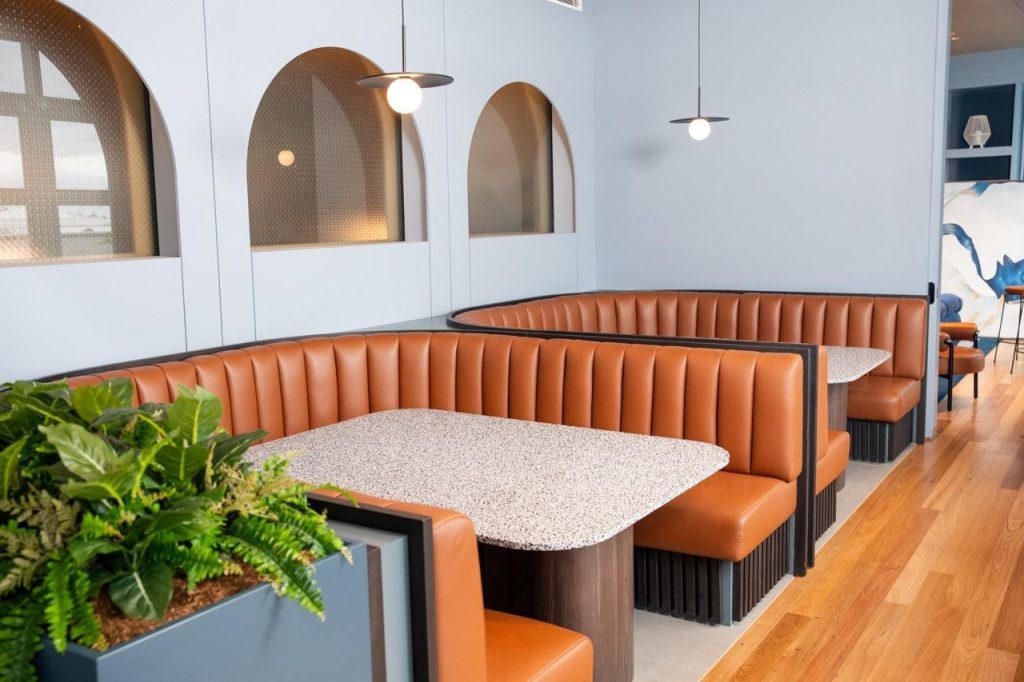
Restaurants, cafés, offices, hotels and waiting rooms need seating that looks welcoming while handling considerably more wear than ordinary household furniture.
Commercial seating may be used by dozens of people every day.
For these environments, appearance must be balanced with durability, hygiene, maintenance and any applicable safety requirements.
Commercial-grade fabrics commonly have Martindale ratings of 40,000 rubs or higher, although the appropriate specification depends on the setting.
A quiet office meeting room has different requirements from a busy restaurant booth.
Vinyl and selected commercial performance fabrics can be useful where regular wipe-down cleaning is necessary.
It’s also important to consider relevant fire-performance requirements, cleaning chemicals, seam construction and the quality of the cushioning underneath.
For business owners, choosing the right upholstery from the outset can reduce maintenance headaches and help furniture remain presentable for longer.
9. Don’t Forget Colour, Texture and Interior Style
Durability matters, but your furniture still needs to feel like home.
The right upholstery should complement your existing interior rather than compete with it.
Neutral shades such as beige, oatmeal, taupe and warm grey remain versatile choices because they work with different furniture styles and colour palettes.
For coastal-inspired Australian homes, textured natural-look fabrics can create a relaxed, welcoming atmosphere.
Prefer something more dramatic?
Deep green, navy, rust and charcoal can bring personality to a room.
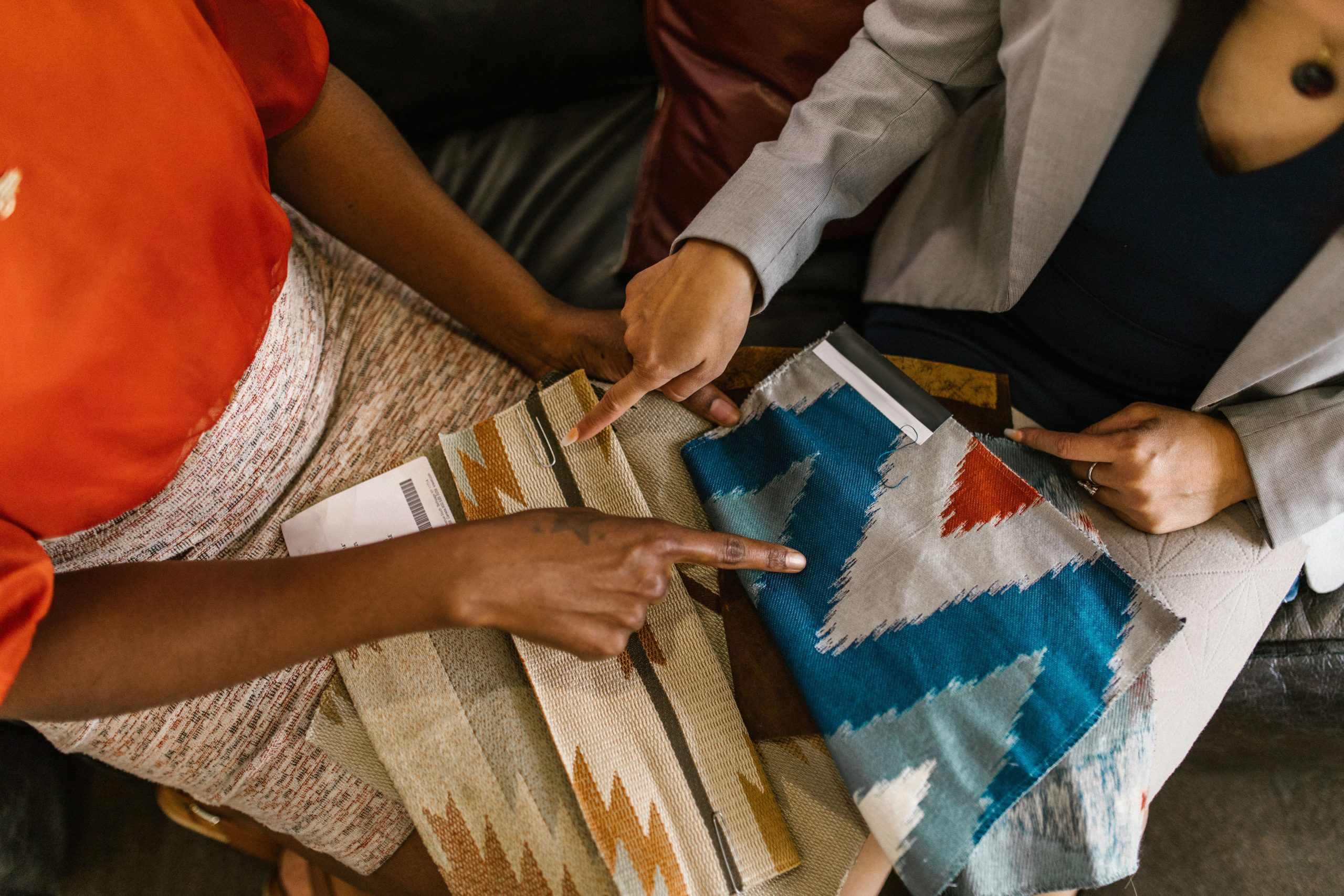
Before making your final decision, take fabric samples home if possible.
Look at them in morning sunlight, afternoon light and under your evening lamps.
Colours can appear surprisingly different depending on the lighting.
Touch the samples, too. A fabric might look beautiful online but feel completely different in person.
10. Why Professional Upholstery Advice Makes a Difference
With so many fabrics available, choosing can feel overwhelming.
That’s where an experienced upholsterer can help.
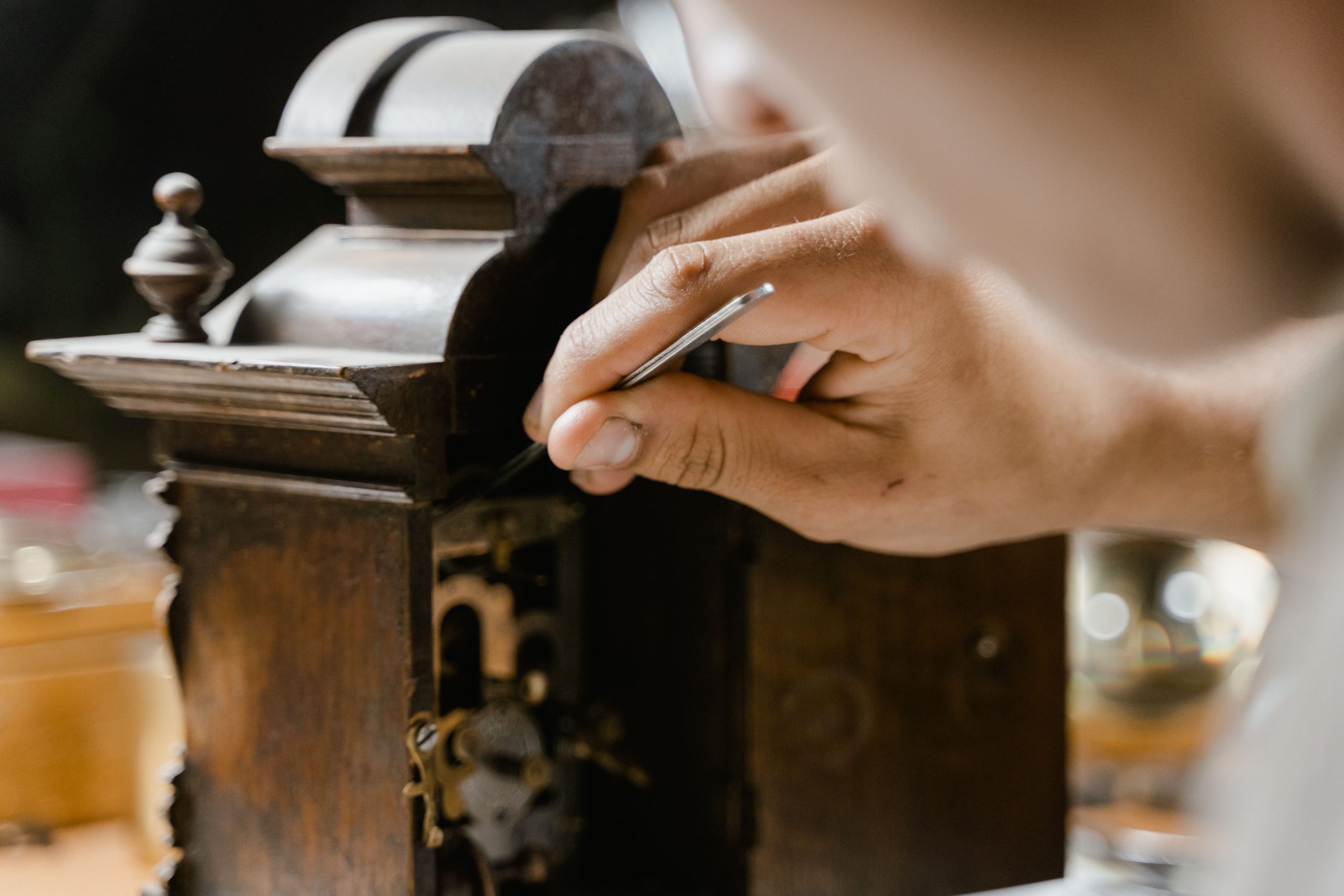
Rather than relying on appearance alone, a professional can assess your furniture, explain material performance and recommend options suited to your budget and lifestyle.
At
Southside Upholstery
, customers can explore a range of upholstery fabrics, leather and vinyl options for furniture restoration and reupholstery projects.
Whether you’re refreshing a treasured armchair, updating a family sofa or restoring dining chairs, choosing suitable materials is an important part of achieving a lasting result.
Professional advice is particularly valuable when working with unusual furniture shapes, older frames or heavily used seating.
Sometimes, giving a quality piece of furniture new upholstery is a more satisfying option than replacing it altogether.
Final Thoughts: Choose Fabric That Fits Your Life
Finding the best upholstery fabric Australia has to offer isn’t about chasing the latest trend or selecting the most expensive material.
It’s about understanding what your furniture needs to handle.
For families, that might mean stain-resistant performance fabric. For pet owners, a tightly woven material could be the smartest option. For sunny rooms, lightfastness becomes especially important. And for commercial spaces, durability ratings and appropriate specifications should guide the decision.
Most importantly, don’t choose on looks alone.
The right fabric should feel comfortable, suit your interior and stand up to everyday life.
Ready to Give Your Furniture a Fresh Look?
If you’re considering reupholstering your sofa, armchair, dining chairs or commercial seating, the team at Southside Upholstery can help you explore suitable materials and finishes.
Southside Upholstery’s furniture reupholstery service